Episode Transcript
[00:00:00] Speaker A: So every time that I would say no to an unnecessary purchase, every time that I would walk into a store and then walk out and then I didn't buy anything, I'm flexing my self.
[00:00:11] Speaker B: Control muscle Entrepreneurs love talking about business. However, it's no secret there's also so many things they love talking about which are not about business.
In the sea of business podcasts, NONE of your BUSINESS is a refreshing break. A surprise kiss, an afternoon fizz.
Through Carla Singson's cheeky and radical takes on mundane and principle heavy topics, you'll gain insights that guarantee you something to talk about on your first Tinder date while visiting Grandma or if you want to impress your new boss.
Big thanks to Proximity Outsourcing for sponsoring this episode. Outsource the most tedious tasks in your business such as data management, appointment setting, and creatives for less than $12 an hour, fully managed. Visit proximity outsourc sourcing.com for more info. Tired of business podcasts? Tune in to NONE of your Business new episodes weekly.
[00:01:23] Speaker C: Are you spending too much money on ads? Want to increase your average order value? Are you eyeing that big exit from your business? Or have you been wondering how you can increase your lifetime value, build a community and basically make more money through customer loyalty and retention? Let us help. Huckleberry Consulting brings over a decade of experience in clients and customer success from the world's biggest companies.
Let your customers tell you what they want. Visit consultheckleberry.com to claim your free audit and quit leaving money on the table once again, that's consulthleberry.com See you there.
[00:02:01] Speaker A: Hey hey. This is cool Carla and welcome to another episode of NONE of YOUR business. We have moved this podcast to publish only monthly so I may upload two episodes a month or maybe one, but we're definitely slowing down a little bit because it's getting a little bit overwhelming with some life changes since I got back here in Mexico last May 2025 and you know we've moved houses, we've tried to settle in and in fact two months after coming back we still haven't even unpacked everything from the storage unit. So it has been amazing though. Business has been awesome actually we just had our record month woohoo for June 2025 so I'm very happy about that and I'm super inspired.
[00:02:52] Speaker D: We also added a lot of AI and automations processes in the business.
[00:02:59] Speaker A: I also upgraded my team's knowledge in terms of automations and AI. We're also hiring a lot of automations roles and there is a big shift in terms of what people are looking for. And it's funny because I always see the trend because I'm in this privileged position of being the person who hires these people, these managers, these creatives, these teammates. So, so I'm in that very special position of being the one to hire them, look for them, really hear from my clients what they're needing. Um, and so I'll give you the te. So I would say based on the last 90 days, our top hires are YouTube video editors. YouTube is really growing right now because it's being picked up by large language.
[00:03:45] Speaker D: Models or AEO, which is like the.
[00:03:48] Speaker A: The ChatGPT or the AI version of SEO. Right.
So YouTube is very visible in these searches. So a lot of people are shifting their investments of content to YouTube.
And number two is a lot of people are now hiring for AI and automations managers to be their point person in the company, to continuously improve operations, to assist their other departments in improving their processes and systems, and of course save time, save money, determine if anyone is a redundancy. So these people are in a way hired as like operations assistants, but they're actually building certain things inside a company's system.
Lastly, we've, we have gotten a lot of inquiries as well with client and customer success managers that help with retention.
They also help in terms of, um, cross selling, upselling, taking care of the client relationship, being able to be first to ask for a review, ask for referral. Basically, customer support is a thing of the past.
It is just very reactive and now.
[00:05:05] Speaker D: People are investing in client success managers.
[00:05:08] Speaker A: Customer success managers, they're much more proactive.
[00:05:11] Speaker D: And not only that, they also help the business grow financially by helping them make more money with the clients that they already have. So my husband Alex actually has an upcoming workshop that I'll also link in the descriptions on how to train your customer support team and turn it into a profit center. Or maybe if you have anyone in your company doing customer support or customer success client success. He's doing an upselling workshop on how you can train your customer success team, your customer support team on how they can help become revenue drivers for your company. And not just something that's proactive.
[00:05:49] Speaker A: So that's it for our updates. Pretty long intro. But I'm actually super excited about this episode today because I was. I will discuss a topic that has been kind of brewing in my mind for a while and it's actually about personal finance. So when we moved, one thing that I noticed when we moved back to our house and the Irony is it's actually a bigger house. It's a three bedroom penthouse with an ocean view with a private pool. It's super nice. My husband chose this house for us. I actually, when we, when we were choosing for like the final three, I actually voted for the more practical option, which is also a three bedroom, but it was like a ground floor location.
It had just like a large kitchen and all of that, but it had no view. And it was also in a good part of town. I mean, same with this condo. It's also in a good part of town, but it did not have an ocean view, it did not have a private pool, and it did not have a view at all actually, because it was in ground floor.
[00:06:56] Speaker D: But it did.
[00:06:57] Speaker A: Have a gym, so that's what the difference was. And this, this one, the condo that we're in right now doesn't have a gym in the building, so we have to go to a separate gym, which is no problem because we already have the habit intact. But when we moved, I actually realized how many, how much stuff I had, how much clothes I had, how many useless things I had, how much I overbought in terms of cosmetics and toiletries. Actually, toiletries, not so much cosmetics because I don't really wear any makeup most of the time. But I just, it just made me take a look at like my spending habits. And throughout the years I would say that I have improved my spending habits and I'm really proud of myself for making my most recent like money decisions. I'm not as impulsive. I also started buying useless stuff and basically I just committed to like my more mindful like spending lifestyle and resisting the urge to over consume.
One thing that also helped me is I know that a lot of people do impulsive shopping through social media and especially TikTok. And fortunately, actually I don't have a TikTok. So I just haven't invested time in a TikTok account.
So I don't spend time on it. So that definitely saved me from probably a lot more impulsive purchases.
[00:08:21] Speaker D: And I also gave myself a challenge.
[00:08:24] Speaker A: Of not using Amazon and how long I can go without online shopping. So. So I think I am gonna be close to 90 days for the first time ever. So hashtag, really proud of myself.
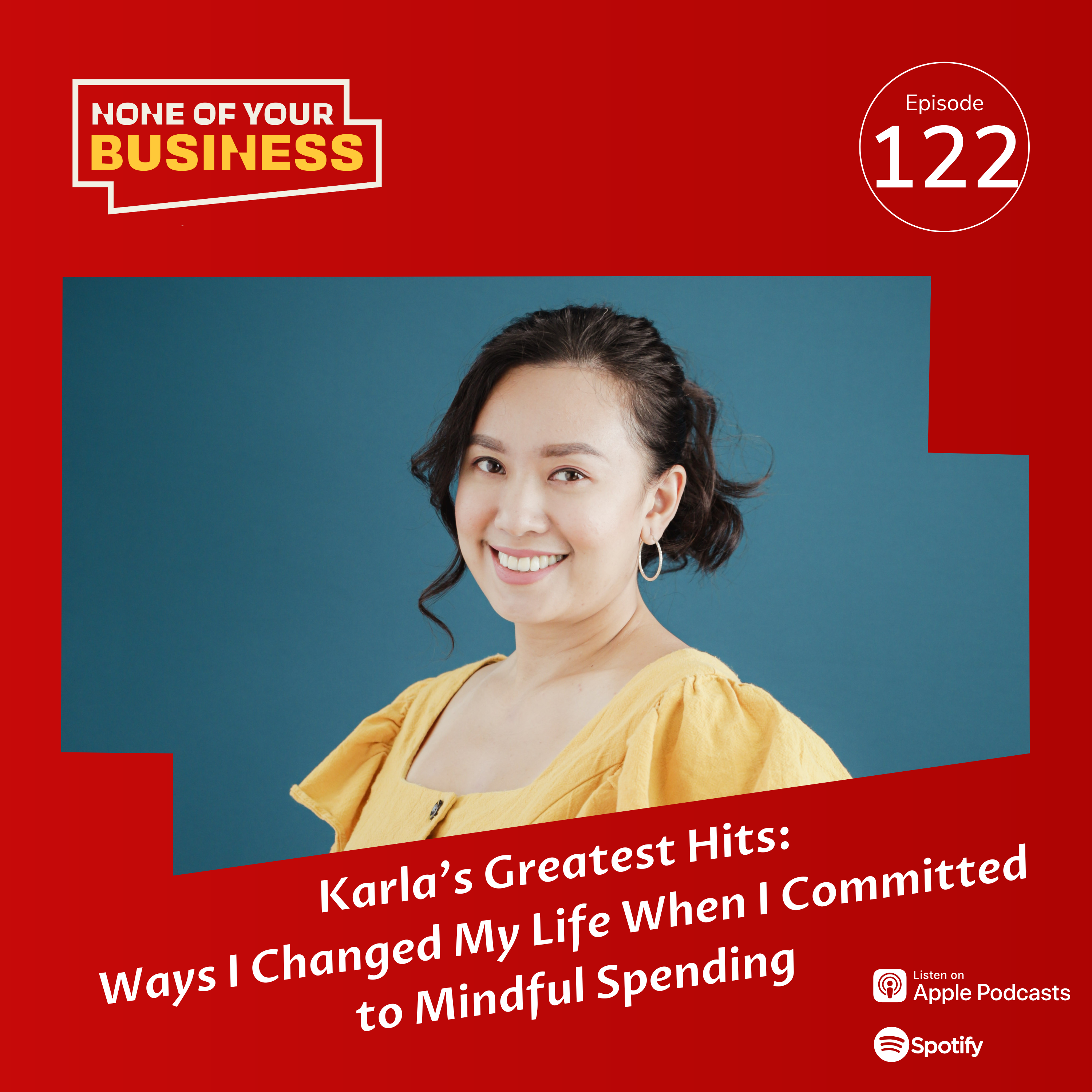
[00:08:40] Speaker D: But today I will discuss the changes that I experienced when I shifted to doing mindful spending. So in the past I had a.
[00:08:50] Speaker A: Lot of impulsive purchases and sometimes these purchases still haunt me.
A lot of them I haven't really thrown out because they are expensive or because they are sentimental. So in the past, because I grew up poor, I had certain hang ups on certain items. Like I've always wanted this bag. I've always wanted this piece of jewelry or hang ups on certain experiences like going into Hermes, not planning to buy anything, and then walking out with multiple bags. So I've always fantasized about these moments. And now that I can afford it and I have actually done this, I think the most expensive thing that I've purchased completely out of the blue was a bag from Louis Vuitton. I love this bag. Actually, this is the kind of bag that I know I will love forever and ever.
[00:09:40] Speaker D: But it was.
[00:09:45] Speaker A: Like a sling bag. Like a sling bag. It had like a long strap, but it was also, you can also remove this strap. So it was like a speedy 25 gray. And it was so beautiful. It's so timeless. And so I bought it because I knew I would love it forever. It was 2600 US dollars at that time. I think it's more expensive now. And I, I love that bag. It's been with me for like four years. And I remember walking into Louis Vuitton. I totally didn't plan to buying that bag, but I just loved it. I fell in love and then I, I bought it.
So, uh, yeah, so that was sentimental to me, but also it's something that I know I will love forever. But also I acknowledge that that was totally an impulsive buy.
So. And you know, looking back at my experiences, I have reflected on these moments where I just kind of wanted that.
[00:10:41] Speaker D: Dopamine rush and what was really going.
[00:10:43] Speaker A: On through my mind when I did that.
So.
[00:10:48] Speaker D: And over the years, even though it.
[00:10:50] Speaker A: Wasn'T an easy process, because sometimes you gaslight yourself, you have an internal debate going on in your mind.
There's one side of you which is like, you gotta be smart about this. You can spend your money somewhere else. And then another side was like, you totally deserve this. You can always make this money back. Life is short. Yolo.
So these are like some of the internal dialogue that goes in that goes like inside my head. And I know that it's not just me that experiencing this, that that is experiencing this. And so I totally acknowledge that this could happen to anyone. And it's not, it's not a toxic thing.
You know, technically in my opinion, it is just a thought that just can't help itself but go into your mind. But over the years especially, and I really credit my husband on this because he's much more practical in terms of money.
He helped me really change my spending habits, my saving habits, my investing habits. And you know, slowly I was able to start to think for myself and police myself without taking away the feeling of being poor or being cash trapped.
[00:12:09] Speaker D: And fully recognizing that by not spending.
[00:12:13] Speaker A: I am taking my power back.
[00:12:14] Speaker D: And it's not because I'm trying to be stuck, stingy or cheap.
Right?
[00:12:20] Speaker A: So here are some of the changes that I've experienced in my, in my life. And I wanted to share them with you so that you guys can also consider mindful spending because it has really done a lot of benefits for my life. So number one benefit is I have reduced stress and anxiety. So knowing exactly where my money goes creates a sense of control for me. And I even have like Google sheets of like my credit cards and the payments that go into them, all of the payments that I have to make to my investment. So I have a family office that handles this, that handles these payments. But for me to be monitoring these payments gives me a feeling of control. I'm not scrambling to cover surprise expenses or drowning in impulse buy guilt.
And because of that, I just have less stress and anxiety in terms of money. In fact, you know that saying when you have money, an emergency is merely an inconvenience. I definitely experienced that. So last week my baby sister, my youngest sister told me that apparently our.
[00:13:32] Speaker D: House in the Philippines that we grew up in, basically, technically my parents still.
[00:13:37] Speaker A: Own it because we've never transferred the.
[00:13:39] Speaker D: Title that we have like over $10,000 of debt remaining on the house and that needed to be paid immediately or else it will be foreclosed.
[00:13:48] Speaker A: So I knew that we owed some money on the house or my parents owed some money in the house, but.
[00:13:53] Speaker D: I didn't know that it was this much. And apparently they've been increasing. They've been applying like a small interest every year, but then it would compound, right? And so now it's like 10k.
So we decided to pay it immediately. I split the amount with my other sister who also has a, is working in the States.
[00:14:12] Speaker A: And, and so that was just like a surprise expense out of nowhere. But in the past I would get so stressed about it, but now I was just able to, because I manage my money better, I was just able to let it happen and I didn't have any stress or anxiety. And every time I see my credit cards being paid and I think I own like 10 credit cards because I was credit card shopping in the past for points, but now that I've determined the top two credit cards that are best for points, I just use these two.
One is for cash back actually, and one is the best for miles. And just, I just use these two like all the time. The others are just like reserve in case. Maybe if this is a Visa, maybe Visa doesn't work. I can use a MasterCard. Or maybe there's a particular perk that I can only get with my amex card. So that was also really good for.
[00:15:04] Speaker D: Me to reduce the usage of my credit cards.
[00:15:07] Speaker A: Definitely reduce stress and anxiety.
The next benefit that I got is sharper mental clarity. So there's, for me, literally there's fewer material distractions and that meant more mental headspace for things that actually matter, like my health, my relationship, my business, you know, my sisters, my friendships, my ever so busy wellness calendar, going to the spa, the salon, my nails, waxing lashes, everything. So anyway, that might be another conversation. In a way, I feel like I may be overspending on beauty stuff, but it does make me feel better about myself. And I still choose, I'm still smart about choosing, like not just according to price or what's famous in terms of a treatment. I still, I still am smart about it. So I get sharper mental clarity now that I've committed to mindful spending because.
[00:16:02] Speaker D: I find it easier to focus on.
[00:16:03] Speaker A: My goals and my relationships and my self improvement rather than chasing the next shiny object. So shiny objects are very hard to resist, especially if you're always on social media. And so another thing that also helped me, especially as someone who does business on social media, is to think like a creator and not a consumer. I do limit my social media use to certain times of the day and sometimes if I do scroll and just scroll, I would literally set an alarm and I'll tell myself I'll just scroll for like 15 minutes, then after that I'm done.
Yeah, so that's another way that I've benefited with committing to mindful spending. Next is stronger self discipline, which also brings about a stronger sense of confidence.
[00:16:50] Speaker D: In the way that you make decisions.
[00:16:51] Speaker A: And how much you trust yourself.
So every time that I would say no to an unnecessary purchase, every time that I would walk into a store and then walk out and then I didn't buy anything, I'm flexing my self control muscle. So over time this builds resilience and confidence in myself and also in my ability to make intentional life choices. And I really, really love that. It helps me love myself more and more and it helps me kind of send a message that you know what I am worth showing up for, I am worth this Discipline and that just makes me feel good overall. That's another great benefit. And this leads to a greater sense of self achievement. So now that I'm smarter with money, I'm not only stopping myself from buying things that are useless or impulsive, but I am also moving my money into more meaningful avenues. So I'm watching my savings grow, I'm.
[00:17:48] Speaker D: Hitting my spending goals and it just.
[00:17:50] Speaker A: Gives me a natural high. That feeling of accomplishment also spills on to other areas of my life. Like it boosts my motivation, it moves.
[00:18:00] Speaker D: My productivity and overall it just gives.
[00:18:03] Speaker A: Me a sense of life satisfaction that.
[00:18:08] Speaker D: Just makes me feel like so responsible.
[00:18:11] Speaker A: Hashtag responsible. So, so because I have shifted focusing on growth of my business and also in my investments, I know that I am investing towards an earlier retirement. Like $1,000 now could probably buy me like one more invested could probably buy me one more month in in retirement. And so now I can just retire like earlier and earlier. The more money I put in my savings and in my investment and among my investment investments as well, I've started to learn which ones have the best return, which ones are easier to liquidate and which ones are not, you know, which ones have more like tax hurdles or paperwork.
Paperwork needed. So I'm also learning a lot of things and it also the sense of achievement kind of adds to my desire to learn more and go deeper in the world of savings and investing because I have increasingly raised my confidence in myself. So by the way, speaking of sense of achievement, quick break and quick add. My company Proximity Outsourcing just recently launched Pocket Proximity.
[00:19:35] Speaker D: And that is you can hire 12 kinds of remote professionals for 20 hours a month and you can just have your credits renewed every month. If you have no need for someone full time, part time or regularly, this would be the perfect offer for you. It's just $399 a month. And if you are one of the.
[00:20:01] Speaker A: Beta Users, the first 20 users you.
[00:20:04] Speaker D: Can lock in for a year for just $299 a month. So these are actual humans, not AI agents.
[00:20:13] Speaker A: You can talk to them and you will also be assigned a particular client success manager. So these are the roles that you can hire. Graphic designer, video editor, content writer or social media manager, bookkeeper, Customer success or customer support.
Client success or client support. Funnel builder, podcast producer, executive assistant, and a WordPress and Shopify developer. So for example, if you have certain needs in your business where you need maybe some social media done and published and then you also need maybe two hours of bookkeeping because you don't have a lot of transactions. You also need maybe 10 reels edited for you so you can pick and choose how many hours you need from each role as long as it amounts to 20 hours a month in total.
[00:21:00] Speaker D: This is a very, very easy and a very convenient subscription for you. And this is perfect for people who.
[00:21:06] Speaker A: Cannot commit to 10 hours a week, 20 hours a week, 40 hours a week of just one role. But if you have these here and their needs, this is the perfect solution for you. So I'll also share the link in the description and also feel free to visit proximity outsourcing.com pocket-proximity so you will.
[00:21:27] Speaker D: Find it there Greater sense of achievement.
[00:21:31] Speaker A: All right, so number five, my other benefit from committing to mindful spending is enhanced emotional stability. So I know I did discuss like earlier it reduced my stress and anxiety. But not just that. Let's talk about regret, right? So impulse shopping often leads to regret or buyer's remorse. And in fact, I've even had worse experiences where I was just super unlucky. And it was, and it was a product of impulse shopping. So, for example, I bought this new swimsuit out of an impulse. And, and when I got home, I checked and they didn't remove the, like, the tracker, you know, that special, like button they put so that it can track, like, if you're shoplifting or something. So they failed to remove that. And I, I paid for it. I already, like, I have the receipt, but I was traveling, so I actually didn't see it until I got home, literally a plane ride home. So now there's no way for me to return it. And it was also not a store that had a website.
It was just, honestly, like a supermarket.
[00:22:45] Speaker D: But it was just like a really pretty swimsuit. So I bought it. I was so annoying. I feel like in those moments I'm.
[00:22:53] Speaker A: Being punished for impulse buying. And of course it hurts a little bit. So that's just like, one example. But oftentimes I would, like go to Sephora just to feel good about myself and buy something. And then I realized I don't really want it or need it. And then I get home and then I just have buyer's remorse. So by spending deliberately, I now avoid the emotional roller coaster of ups and downs tied to fleeting purchases. And now I just enjoy a more steadier, more positive mood because I'm much more intentional with how I spend my money. So next is I've also experienced an increase sense of gratitude and contentment. This is, I think, one of the best gifts ever because.
Because I Stopped chasing trends or I stopped subscribing to over consumption. I started actually appreciating what I already have. And it also helped me become more appreciative of my life in general, of my even. Even the fact that I can choose to not buy certain things, but I have the ability to do so. That is huge for me because in the past I had no choice.
I was just poor or I had to borrow money in order to buy something.
So this shift towards an attitude of gratitude, it cultivates happiness and reduces the itch to just get more, more and more trying to keep up with the Joneses. I really realize I have nothing to prove to anyone, not even to myself. And, and that I have everything that I need. And that just gives me a better sense of peace as well. And peace is always priceless, guys.
So next benefit is improved decision making. So practicing mindful spending teaches you how to pause, teaches you to evaluate your needs versus your wants, and makes choices aligned with your values. It also helps you consider other factors better.
So, you know, I mean, I'm not saying to never ever buy anything that is not a want. I'm just saying be more mindful about it. And so asking your yourself a question of do if I like this bag, do I already have something similar at home?
[00:25:14] Speaker D: Because chances are you might have something similar at home because you like this style, you like this design, you like this color, right? Or asking yourself, is this something that I will love forever? That's also a question that I ask myself right now. It doesn't mean that I'm not buying anything that I want and just focusing on my needs, but it just helps me decide better.
And of course, because of that benefit.
[00:25:40] Speaker A: I have also benefited from a lower cognitive overload overall. So this is the last benefit that I'll be discussing. Once I committed to mindful spending, I.
[00:25:52] Speaker D: Had less clutter, both physical and financial clutter.
[00:25:56] Speaker A: And I also was able to clear out some mental noise, which means it freed up my bandwidth for creativity, problem solving, genuine connection, and even just rest, you know, so it's, you know, when I started to really be mindful, I had less hang ups about certain things.
I had less desire to be envious of what other people had. And it also made me value what I truly want in my heart, which is time, freedom and location, freedom and freedom from the opinions of others.
Those three things are my top values. And if something isn't moving me towards that, then it might not be a worthy investment of my time or money. So I always ask myself that. So overall, adopting this mindset of mindful spending isn't about deprivation, it's all about empowerment.
[00:27:03] Speaker D: Each dollar you choose to keep is a vote for your peace of mind and a step towards living a richer and more intentional life, which is what we all want at the end of the day anyway. So I hope that you learned something from this episode. I hope that it made you think.
[00:27:20] Speaker A: A little bit about your purchases and.
[00:27:24] Speaker D: If you have any stories of over consumption or if you are a recovering.
[00:27:28] Speaker A: Shopping addict, let me know.
[00:27:31] Speaker D: I would love to chat with you.
[00:27:32] Speaker A: And share some thoughts.
[00:27:34] Speaker D: And if you want to follow me and take a peek of what goes.
[00:27:41] Speaker A: In my personal life, follow me on Instagram. Karla Stefan K A R L A S T E F A N and send me a message. View my stories and I would love to stay connected. So thank you so much for hanging out with me here. I'll see you in the coming weeks for another episode of NONE of your Business.
[00:28:01] Speaker E: Bye.
So it's a wrap to my entrepreneur friends. I hope that you found this episode interesting and enjoyable. I know I did. Big thanks to our sponsor, Proximity Outsourcing for making this possible. If you need to outsource anything in your business so you can scale fast and easy, visit proximityoutsourcing.com and check out their solutions. If there's any topic that you want to request, feel free to reach out. I only have two conditions. You tell me why you find it interesting and you promise it's not business talk. Find us on Spotify, Apple Podcasts, on YouTube and leave us a comment or review because you're cool like that. This is your host, Carla and thank you so much for joining me. Thank you for your interest in fun stories. Now we can get back to business. See you next week. And remember, everything here is none of your business.